On conscience, attention, and the quiet responsibility of refusing to adapt too easily to what diminishes human life.
Dear Friend,
On July 6, 2002, John Kenneth Galbraith wrote:
“The modern conservative is engaged in one of man’s oldest exercises in moral philosophy; that is, the search for a superior moral justification for selfishness.”
It is not a gentle sentence.
It was not meant to be.
And yet, here it is again—
not as theory, but as atmosphere.
A budget is being proposed that expands the machinery of war,
while quietly pulling breath away from the things that sustain life—
environmental protection, scientific research, public health…
and yes, the fragile, necessary ecosystem that allows art to exist at all.
Because art does not live in isolation.
It lives in a culture that either protects attention
or erodes it.
There is another kind of cutting that doesn’t always show up in headlines.
Institutions reshaped.
Voices dismissed.
Funding withdrawn not just from programs,
but from ways of seeing that do not align with power.
The John F. Kennedy Center for the Performing Arts has already felt the tremor of this shift—
a reminder that art, when it remains honest,
is rarely comfortable for those who prefer control.
Because artists do something quietly dangerous.
They notice.
They hold still long enough to see what is actually there—
not what is declared,
not what is packaged,
but what is true beneath the surface.
And once something is truly seen,
it becomes harder to dismiss,
harder to justify.
I think of a moment I recently came across—
Bill Murray standing in front of a painting,
speaking about how, in a moment of deep despair,
the simple act of looking—really looking—
interrupted the descent.
A painting did not solve his life.
It did something more immediate.
It kept him here.
This is what art does.
It does not argue policy.
It does not draft legislation.
It does not compete with power on its own terms.
It restores something more fundamental:
The ability to feel.
To pause.
To recognize beauty where none was promised.
To remember that life is not only something to be managed or defended—
but something to be experienced.
And so, when we speak about budgets,
we are not only speaking about money.
We are speaking about:
What is allowed to endure.
What is quietly diminished.
What is nourished.
What is starved.
A culture that invests in force
while withdrawing from care
does not only change its policies.
It changes its inner life.
There is a line often attributed to Joseph Beuys:
“Every human being is an artist.”
Not in the sense of profession—
but in the sense of perception.
We are all shaping the world
by what we choose to see,
what we choose to protect,
what we choose to ignore.
I do not believe art is a luxury.
It is one of the last places
where truth can remain unforced,
where attention is not yet fully fractured,
where something quiet and essential
can still be felt without permission.
And perhaps that is why it is so often dismissed
when power narrows its view.
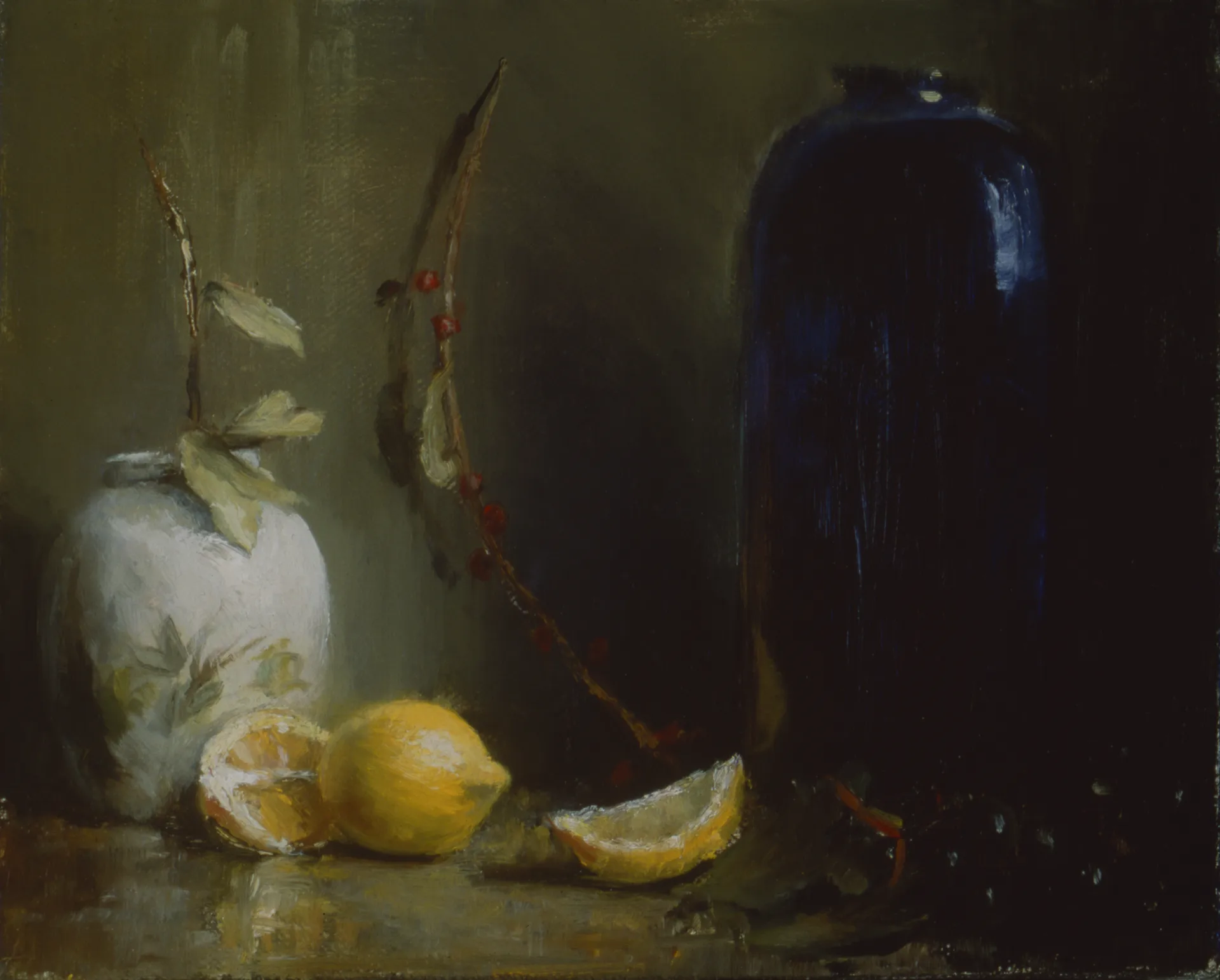
I think of one of my own paintings—
a surface built slowly in north light,
where nothing announces itself,
and everything depends on attention.
It does not ask to be understood quickly.
Only to be stayed with—
long enough for something quieter to emerge.
We may indeed be living through one of those compressed moments in history—
where change accelerates,
and choices made in a few short years
echo for decades.
But even now—especially now—
there remains a quieter choice beneath all of it:
To continue to see.
To continue to feel.
To continue to make, and protect, and share
the small, steady acts of attention
that remind us of who we are.
Because in the end,
what we fund reveals what we fear.
But what we create—
that reveals what we love.
At the edge of light,
~ Melanie